
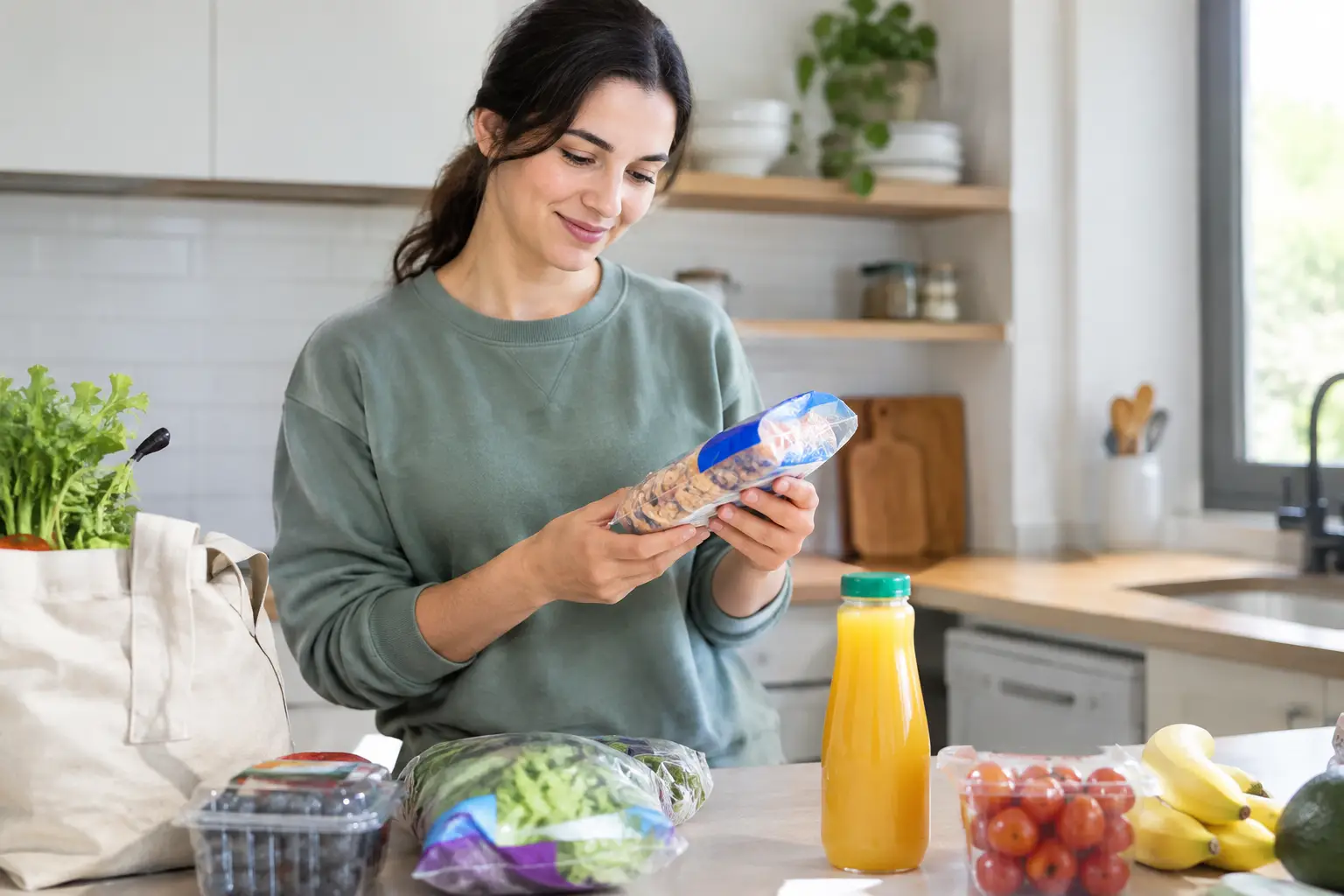
A granola bar in the car. Frozen dumplings after a long day. Cereal eaten while packing lunches. Packaged foods are often the meals that happen when time, energy, or both are short. Knowing how to log packaged foods means you can keep a useful record without turning every wrapper into a research project.
The goal is not a perfect food diary. It is a record that is close enough to help you notice patterns, make decisions, and return to your routine tomorrow. Most of the time, the package already gives you what you need.
Start with the barcode when it is available
Barcode scanning is usually the fastest way to log a packaged item. Scan the product before you throw away the wrapper, and check that the result matches what is in your hand. Brand names can be similar, and databases sometimes contain older versions of a product.
Look at the serving size first. A barcode entry may show nutrition for one serving, the whole package, or a different package size than yours. If you ate the full single-serve bag, logging one serving may be right. If you ate half a family-size bag, adjust the amount before saving it.
A quick check takes a few seconds: compare the calories and serving size in the app with the Nutrition Facts label. You do not need to verify every number line by line. You are simply making sure you did not scan the wrong flavor, size, or version.
How to log packaged foods from the label
Sometimes a barcode will not scan. The item may be new, imported, sold by a small local maker, or simply missing from the database. The label is your backup, and it is usually more reliable than searching for a similar item.
Start with the serving size and servings per container. These two lines explain most logging mistakes. A package that looks like one snack can contain two servings. A bottle may list nutrition for eight ounces even when the bottle holds sixteen.
Then enter the information your tracker uses. For many people, that means calories and protein, carbohydrates, and fat. If you track fiber, sugar, sodium, or another detail, use the label for those as well. Save the item if you buy it often, so the next log is quick.
Do not get stuck on tiny rounding differences. Food labels are allowed to round some values, and app entries may calculate totals a little differently. When the serving size and main nutrition numbers are reasonably aligned, move on.
Use the amount you actually ate
The label can be accurate while the log is not. The difference is usually portion size.
If you ate two servings, log two. If you shared a package, make a reasonable estimate of your part. If you poured crackers into a bowl and did not measure them, choose the closest serving amount and keep going. You can be more precise next time if it would genuinely help, but one uncertain snack does not require a restart.
For multipacks, check the individual wrapper rather than assuming the box entry applies. Snack-size, regular-size, and family-size versions of the same food can be quite different.
When the database entry and label disagree
Trust the package in front of you. Products change recipes, portion sizes, and packaging. Database entries can also be created by other users, which means an entry may have a typo or be based on an older label.
If the barcode result is close but not exact, edit the serving amount or create a new entry from the label. If it is clearly wrong, skip it. Logging a similar food is better than spending ten minutes searching, but use the actual label when you can.
There are a few common reasons entries look strange. The listing might be for a prepared version instead of dry food, for example, or it may use grams while the label uses pieces. It may also list a different flavor. Check the product name, package weight, serving size, and calories before deciding it is the right match.
Log simple meals as simple meals
A packaged food does not need to become a complicated recipe. If lunch was a frozen bowl, log the frozen bowl. If breakfast was yogurt, cereal, and a ready-to-drink beverage, log those three items separately if that feels easy. There is no prize for rebuilding a meal from individual ingredients when the label already describes the product.
The exception is when one package becomes several meals. If you cook a boxed meal kit or use a sauce across multiple dinners, logging the portion you served yourself may be more useful than logging the entire package at once. Again, choose the approach you are most likely to repeat.
This is where a nutrition tracker should reduce friction, not add it. In Corely, barcode scanning and saved foods can make repeat items less of a task. The useful system is the one you can still use on a tired Tuesday.
Build a short list of repeat foods
Most people do not eat completely new foods every day. There are usually a handful of bars, cereals, frozen meals, sauces, drinks, and snacks that come up again and again. Save accurate entries for those items once.
This has two benefits. It makes daily logging faster, and it gives you more confidence in your records. You are not relying on a vague search result every time you buy the same crackers.
A short list is enough. You do not need to organize your entire pantry in one sitting. Add favorites as they naturally show up. The next time you scan or enter one, take the extra moment to confirm the label. Over a few weeks, the list builds itself.
Let estimates stay estimates
Some packaged foods are hard to divide exactly. Maybe you ate a few handfuls from a bag. Maybe your child finished part of your snack. Maybe you had a bite while making dinner and do not remember how much.
Estimate the closest amount and leave it there. Trying to reconstruct every bite from memory can make tracking feel punitive, especially after a busy or emotional day. A record with a few reasonable estimates can still show you useful trends across a week.
The same applies when you forget to log until later. Add what you remember. If you can only recall that you had a packaged sandwich and a bag of chips, use the closest entries. Missing details are not evidence that you failed. They are just missing details.
Use the log to notice, not to judge
Packaged food is not a category you need to defend or avoid. It can be convenient, enjoyable, affordable, portable, and practical. It can also make nutrition tracking easier because serving information is right on the package.
What matters is whether logging helps you understand your own routine. You may notice that certain workdays leave you underprepared for lunch, or that a particular snack keeps you satisfied through an afternoon meeting. You may notice nothing dramatic at all, which is fine. Consistency often looks ordinary.
If checking every label starts to make food feel like another job, scale the process back. Scan what you can. Save frequent items. Estimate the rest. The next useful log is always more valuable than chasing a perfect one.