
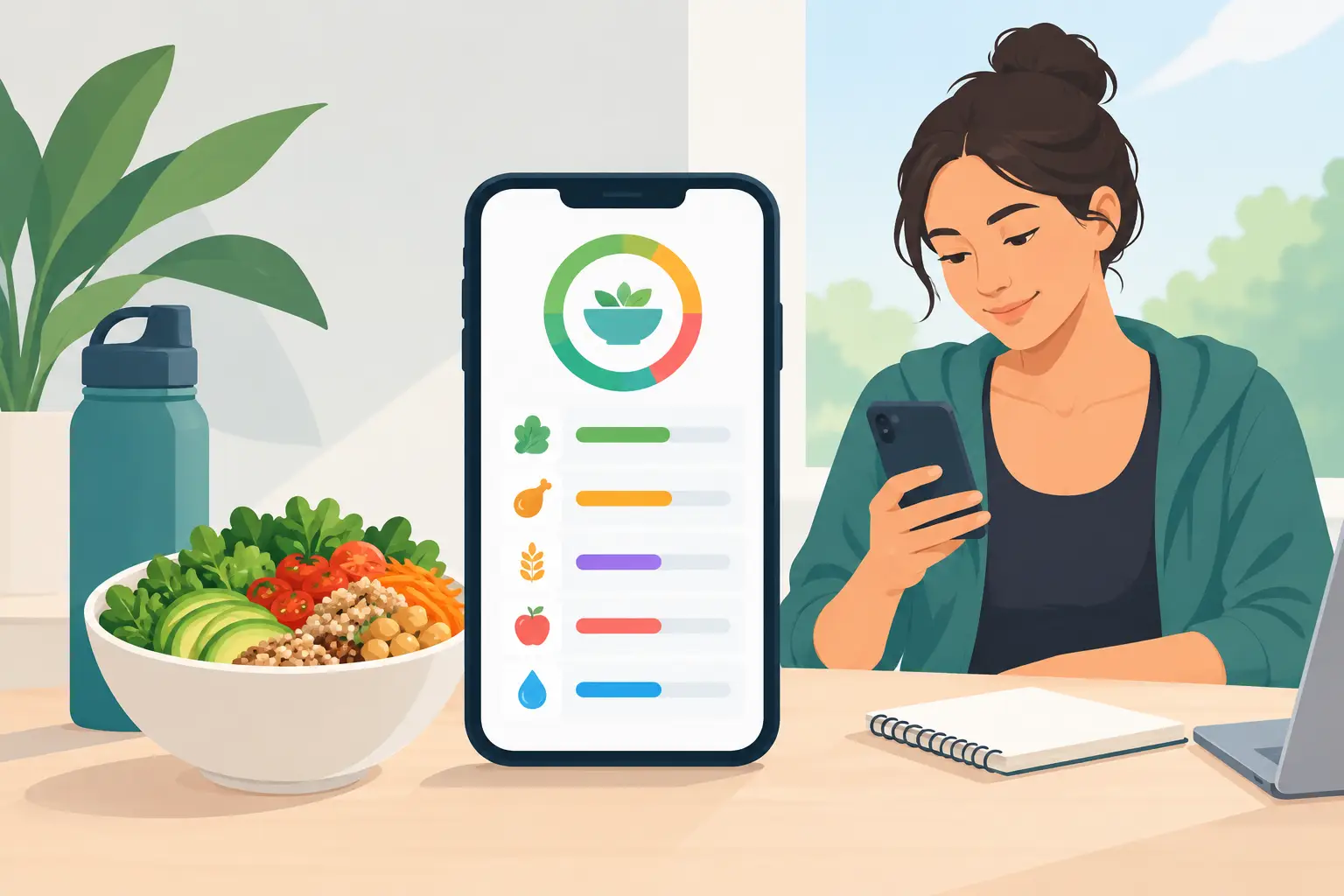
A nutrition app can look excellent in a five-star review and still be a poor fit for your actual week. That is the problem with many nutrition tracker reviews: they focus on the size of a food database, the polish of a dashboard, or how quickly someone lost weight. Those things can matter. But if an app makes you avoid logging after takeout, a stressful workday, or three days off routine, it is not helping you build a habit that can last.
The more useful question is not, “What can this tracker measure?” It is, “What will I realistically keep using when life gets messy?”
How to Read Nutrition Tracker Reviews
Reviews are personal snapshots. One person may want precise macro calculations for a competition diet. Another may simply want to notice that lunch is usually too small, dinner gets rushed, and protein disappears on busy days. Both needs are valid, but they lead to different definitions of a good app.
Start by noticing what the reviewer is trying to solve. A review that praises a huge restaurant database may be useful if you eat out often. A review that celebrates detailed custom recipes may matter if you cook most meals at home. If someone calls an app “too simple,” ask whether that simplicity could make it easier for you to return after a missed day.
Also pay attention to reviews written after the first week versus the first few months. Early praise often reflects novelty. Long-term feedback is more revealing when it mentions everyday friction: whether search works reliably, whether corrections are easy, whether the app feels calm after an imperfect day, and whether logging takes more energy than the person has available.
A tracker does not need to make food emotionally neutral all by itself. But it should not turn ordinary eating into a daily verdict on your character.
The Features That Matter After the First Week
Food logging should be quick, but not careless
Barcode scanning, saved meals, recent foods, recipe tools, and a credible food database reduce the effort of logging. For many people, barcode scanning is especially helpful for packaged staples like yogurt, cereal, frozen meals, or snacks. It removes a small barrier at a time when small barriers can end the habit.
Speed is not the only consideration. Look for an app that lets you edit serving sizes easily and gives you enough information to make a reasonable choice. Food databases are not perfect. Restaurant meals vary, user-entered items can be inaccurate, and labels change. A useful tracker treats data as a practical estimate, not a courtroom record.
If you find yourself spending ten minutes trying to identify the exact version of a food, the system may be asking too much. Logging a close match and moving on is often more sustainable than chasing precision you cannot verify.
Targets should inform decisions, not create pressure
Calories and macros can be valuable tools. They can help you see patterns in protein intake, build meals that keep you full, or support a specific body composition goal. Yet the way an app presents those targets matters as much as the targets themselves.
Look for flexibility. Can you adjust goals as your training changes? Can you view protein, carbohydrates, fats, and calories without being pushed into an all-or-nothing score? Does the app leave room for a higher-calorie family dinner, a low-appetite day, or a week when sleep and stress deserve more attention than optimization?
A daily target is a reference point. It is not proof that you succeeded or failed. The best systems make that distinction clear.
Your nutrition plan should fit the rest of your routine
Food does not happen separately from training, sleep, fasting, work, and caregiving. If you lift regularly, you may want nutrition data alongside workout progression. If you practice intermittent fasting, you may want to see your eating window without treating fasting as a punishment for eating. If you are rebuilding consistency, weekly trends may be more helpful than a perfect-looking day.
This is where an integrated platform can reduce mental clutter. Instead of moving among separate apps for workouts, meals, fasting, and progress, you can see the broader pattern. Corely, for example, brings those pieces together with practical coaching that can help translate the data into a next step for today.
Integration is not automatically better. A standalone food tracker may be the right choice if nutrition is the only thing you want to manage. But if your habits affect one another, connected information can make your choices easier to understand.
What Reviews Often Miss
Many app-store reviews do not cover the details that become important later. Before choosing a tracker, look beyond average star ratings and check the product description, screenshots, and recent user comments for a few practical answers.
First, consider the correction experience. You will log the wrong food, enter a portion incorrectly, or forget a meal. Can you fix it without frustration? A forgiving interface supports honesty. When corrections are tedious, people often stop logging rather than deal with the mistake.
Next, consider what happens after a gap. Some trackers lean heavily on streaks, red warnings, and daily compliance language. That can motivate certain people for a short period. For anyone recovering from burnout, a disrupted schedule, or a history of rigid dieting, it can turn a missed day into a reason to quit.
A better approach is simple: yesterday is information, and today is another opportunity to make one useful choice. The app should help you restart without requiring an apology.
Privacy deserves attention too. Nutrition logs can reveal sensitive information about health, routines, and behavior. Read the privacy details before committing. Consider what data is collected, whether it is shared for advertising, and what account controls are available. An app does not need to be dramatic about privacy to be clear about it.
Finally, look at the cost after any trial period. Premium features may be worth paying for when they remove meaningful friction or provide guidance you use. They are less valuable when they merely add more charts you feel obligated to check. The right price depends on your budget and how consistently the tool earns a place in your routine.
Try a Tracker During an Ordinary Week
Do not judge a nutrition tracker on your most motivated Monday. Test it during an ordinary week that includes work, errands, leftovers, a restaurant meal, and whatever tends to interrupt your plans.
For seven days, use the app with a deliberately reasonable standard. Log most meals. Use approximate portions when needed. Save foods you eat repeatedly. Notice how you feel when you open the app after a meal that was more spontaneous than planned.
At the end of the week, ask a few direct questions. Did logging help you notice something useful? Did it take a manageable amount of time? Could you understand your calorie or macro targets without becoming preoccupied with them? Did the app make it easier to plan the next meal, or did it make eating feel like another task you could get wrong?
The answers will tell you more than a feature comparison. An app can have every tool available and still create too much noise. Another can be less detailed but give you enough structure to keep going.
Choose the Tracker You Can Return To
The best nutrition tracker is not necessarily the one with the most foods, the strictest targets, or the loudest promises. It is the one that helps you see your patterns clearly enough to make a better next decision.
Some weeks, that may mean planning protein at breakfast. Other weeks, it may mean logging dinner without turning it into a judgment. If your routine breaks, choose a system that makes the return feel small: open the app, record what you can, and let the next meal be a fresh place to begin.