Workout System
Corely builds workouts around structure, flow, and progression. Users do not just receive a list of exercises. They get a session designed with focus, set flow, grouped work, rest timing, and progression logic.
How Corely plans workouts
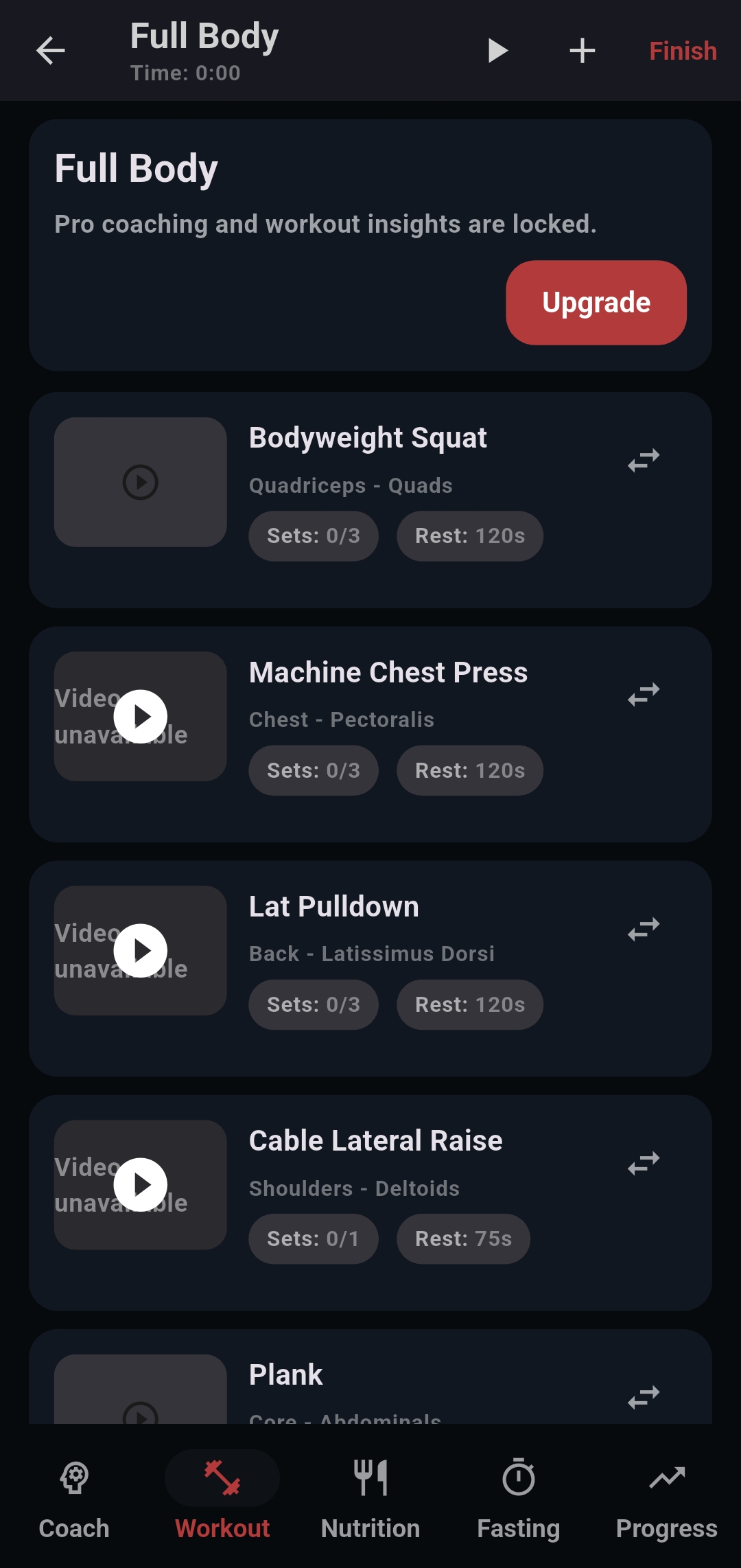
Planning starts with the user’s goal and training structure, then the session is shaped by exercise role, focus, and progression behavior.
Workout planning
- Programs are organized by training split and focus
- Exercises are selected to fit the day’s objective
- Primary, accessory, and isolation work can follow different progression behavior
- Rest timing and group structure support the intended training effect
Session experience
- Clear session header with focus and exercise count
- Guided progression through the workout
- Coach messaging directly inside the session
- Set tracking and rest support built into each exercise block
Supersets
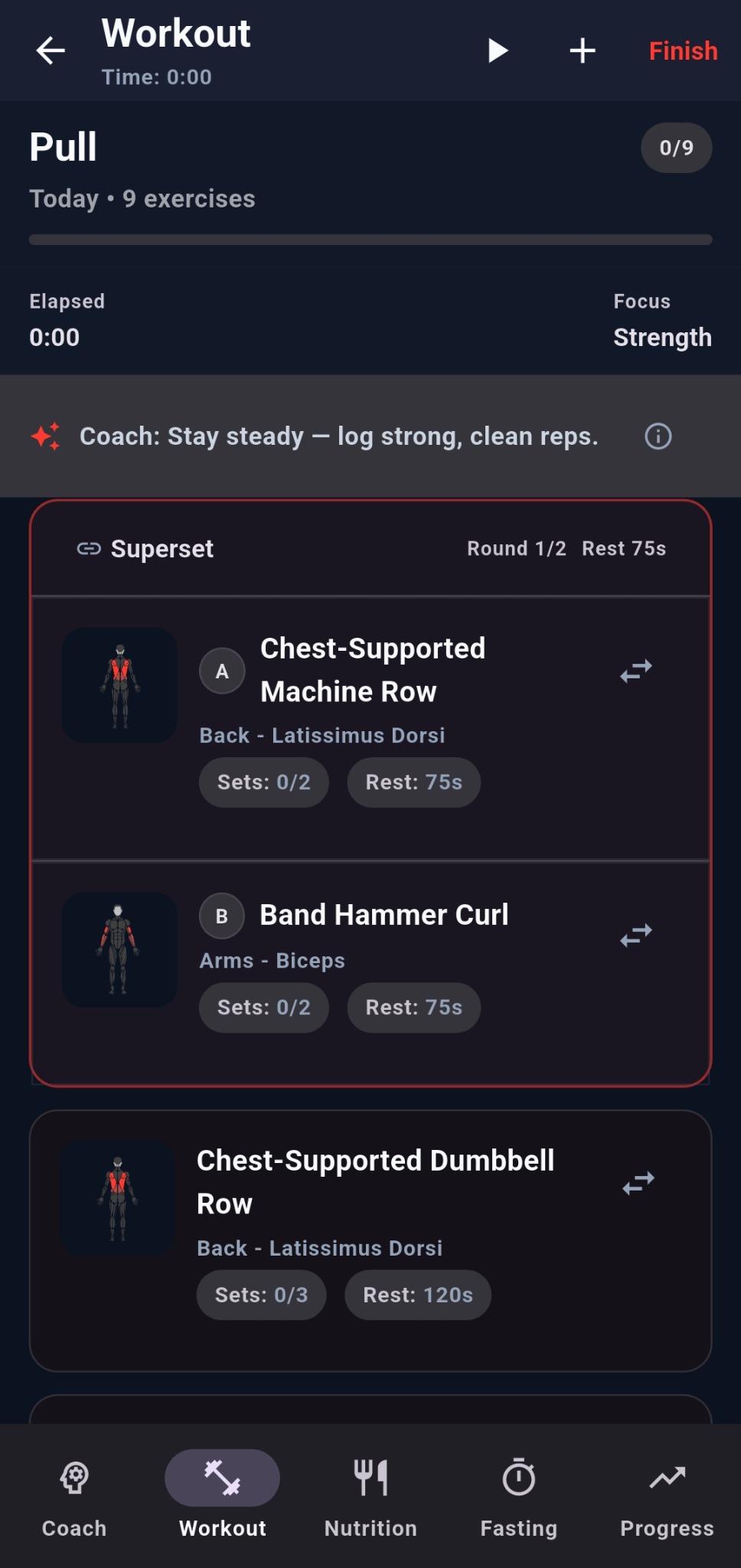
Supersets pair exercises together so users move from one movement to the next with an intentional structure.
Why supersets matter
- Improve efficiency by reducing downtime
- Create a stronger training rhythm inside the session
- Make paired exercise flow obvious to the user
- Keep rest expectations clear at the group level and exercise level
On the site, this screen helps users immediately understand that grouped exercises are not random. They are a planned part of the training experience.
Circuits
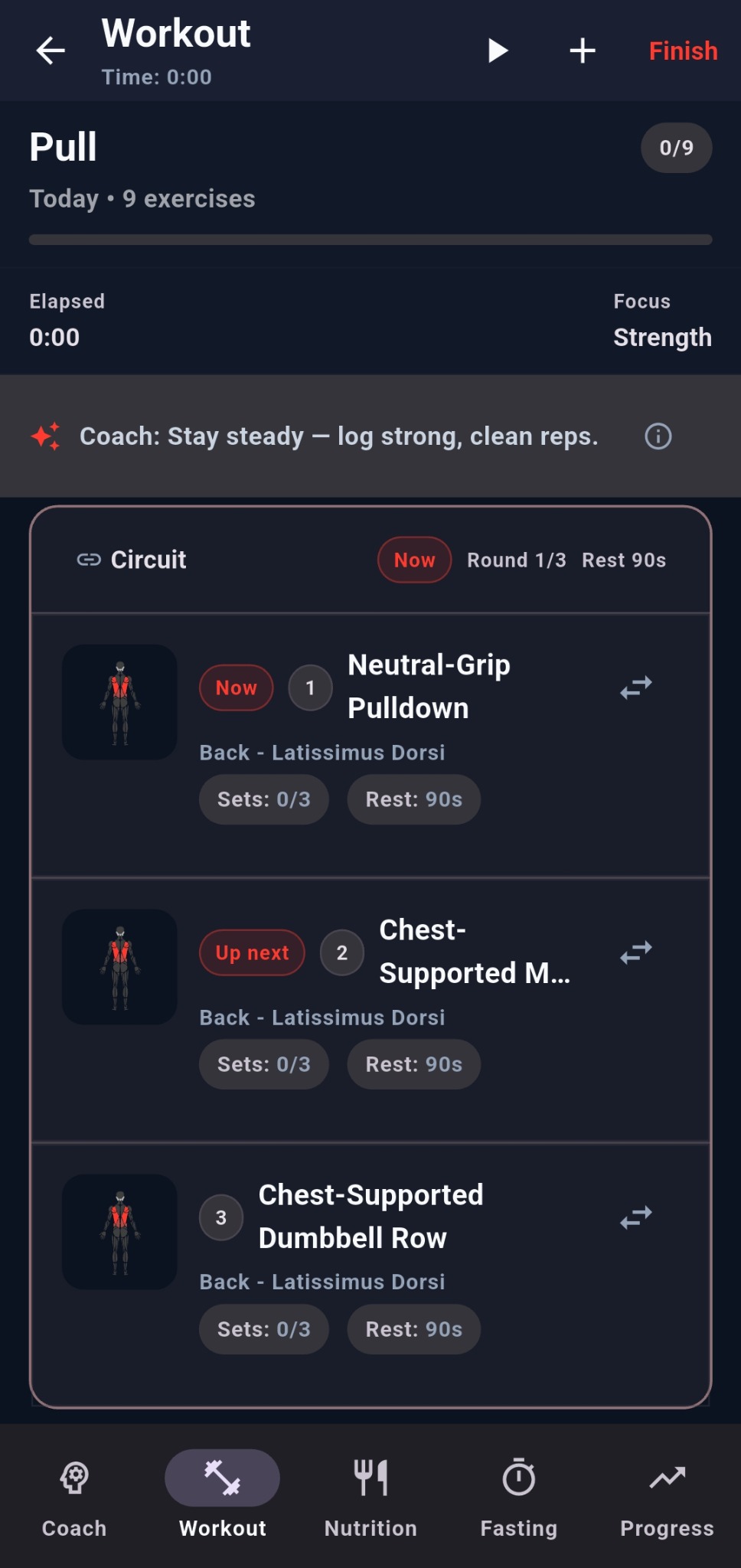
Circuits organize multiple exercises into a repeated loop. Corely makes the order, current exercise, and upcoming movement easy to follow.
What users need to know
- Circuits are built for structured multi-exercise flow
- The current and next exercise are clearly highlighted
- Round count helps users understand how much of the group remains
- Rest stays visible so the pace feels guided, not confusing
Progression settings
Progression is one of the most important parts of Corely. Users can understand how suggestions are generated and how aggressive or conservative they want recommendations to be.
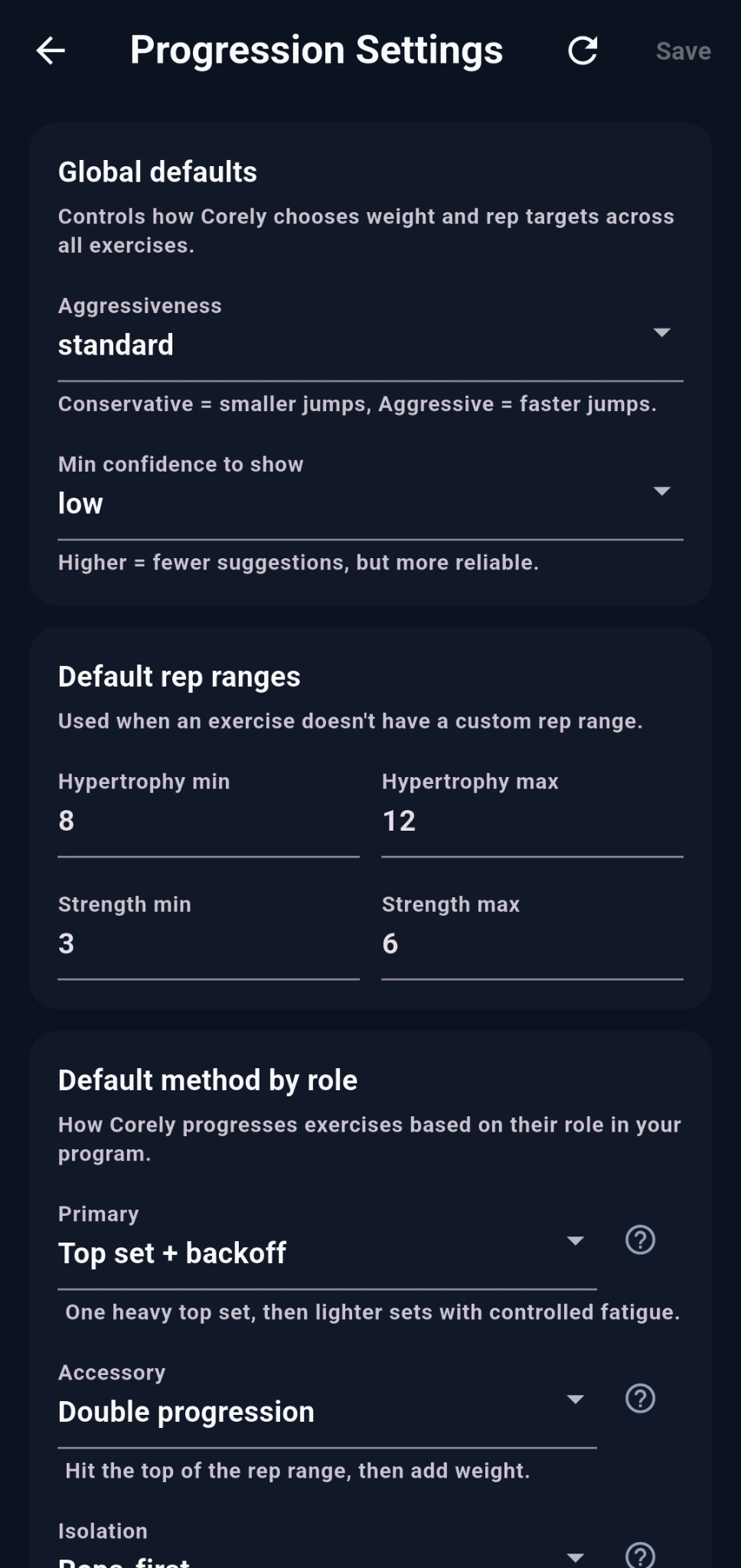
What these settings do
- Aggressiveness changes how quickly suggestions move upward
- Confidence threshold controls how reliable a signal should be before showing a recommendation
- Default rep ranges shape the target zone for hypertrophy and strength work
- Method by role allows primary, accessory, and isolation movements to progress differently
Why this matters
Many users want a system that feels smart without feeling rigid. This page shows that Corely can be adaptive while still giving the user control over how progression behaves.
Comparing workout apps before you choose
Corely vs. Fitbod and Hevy for workout planning and consistency. Public product information checked September 9, 2026.
| Need | Corely | Fitbod | Hevy |
|---|---|---|---|
| Best fit | Consistency across habits Training plus food, fasting, and progress in one place. | Personalized strength workouts Strong focus on generated/adaptive workout recommendations. | Lifting log + community Routines, workout logging, progress analytics, and social features. |
| Workout planning | Personalized plans, anchors/preferences, duration matching, warm-ups, supersets/circuits, progression. | Personalized workout recommendations based on goals and training context. | Custom routines plus Hevy Trainer on Pro for adaptive programming. |
| Pricing snapshot | Free download. New accounts get 7 days of Pro features free, no subscription required. U.S. App Store Pro is $4.99/month or $49.99/year. | Official support lists $15.99/month or $95.99/year, with regional/platform variation possible. | Core workout tracking is free; current Hevy pages list Pro/Trainer options, with pricing subject to change. |
Sources checked September 9, 2026: Fitbod, Hevy. Prices and features can change — verify current terms in the relevant app store before subscribing.
Read the full workout app comparison → See every comparison on Why Corely →
What is double progression?
Double progression means improving performance inside a rep range first, then adding weight once the top of that range is reached consistently.
What is top set plus backoff?
This method uses one heavier working set followed by lighter sets to accumulate more controlled work. It helps users push a primary movement while managing fatigue.
Why show separate workout pages instead of a short feature paragraph?
Because workout planning, grouped exercises, and progression are major parts of Corely’s value. They deserve their own explanation and supporting screens.