
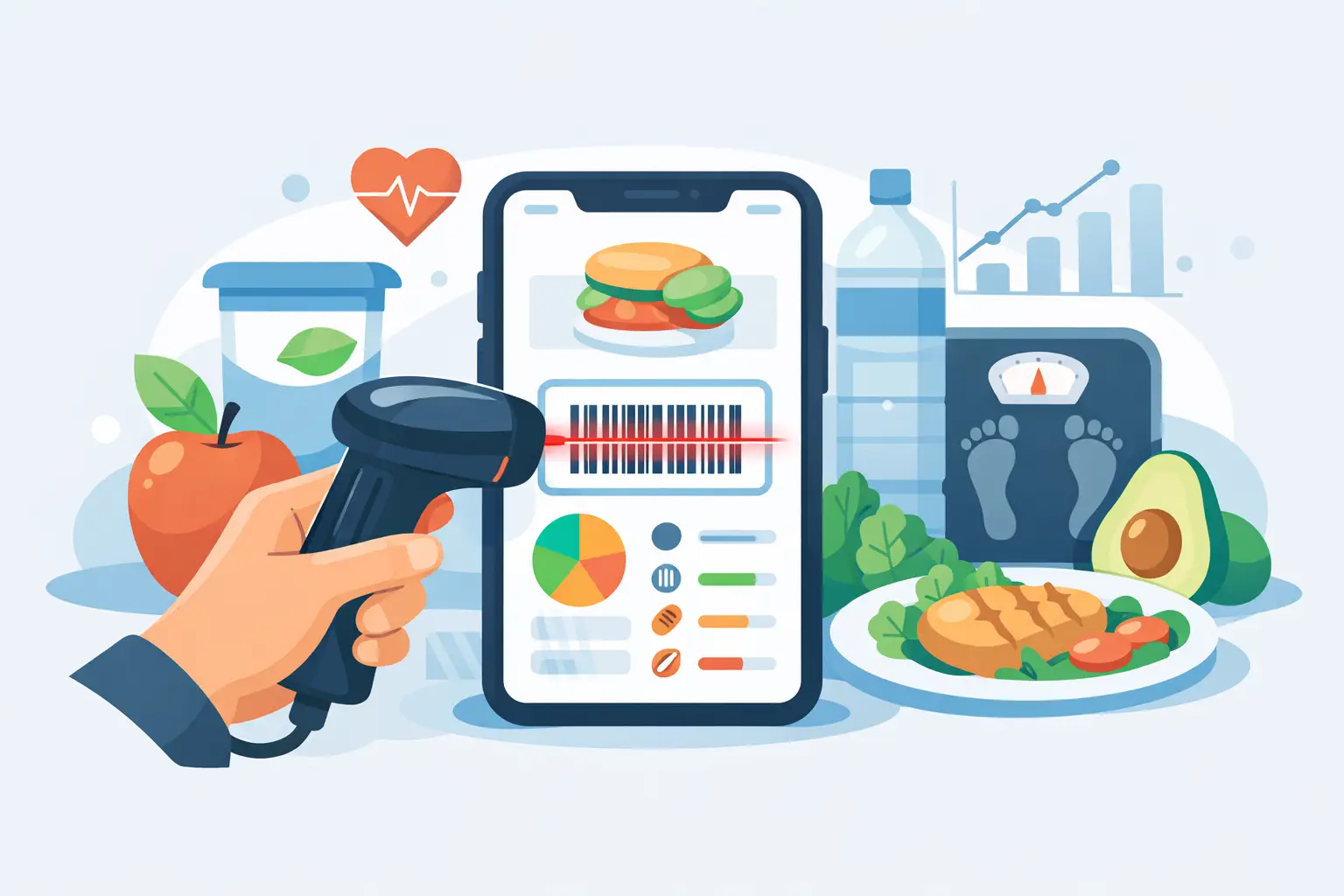
The box of cereal is on the counter. You are packing lunches, answering a message, and trying to get out the door. This is where a barcode scanner calorie tracking app earns its place: not by making food perfect, but by making a useful choice easier to repeat.
For many people, calorie tracking breaks down before the numbers become relevant. Searching for every packaged food takes too long. Guessing feels unreliable. Missing a few entries can trigger the familiar thought that the whole day is lost. A scanner removes some of that friction. Point your phone at the barcode, check the serving size, log it, and move on.
That is a small action. Small actions are often what keep a health routine alive when life is not especially cooperative.
What a Barcode Scanner Calorie Tracking App Actually Does
A barcode scanner reads the Universal Product Code on a packaged food and matches it to a nutrition database. When there is a match, the app can pull in calories, protein, carbohydrates, fat, and sometimes fiber, sugar, sodium, and other details from the label.
The practical benefit is speed. Instead of typing "plain Greek yogurt" into a search bar and sorting through dozens of entries, you can scan the container you actually have in your hand. This can make it easier to log the foods that tend to disappear from memory: a bottled drink, a granola bar between meetings, the handful of crackers while making dinner.
A good scanner is not meant to turn every bite into a verdict. It is a record of what happened. That record helps you notice patterns with more clarity and less storytelling. Maybe your protein is lighter than you thought on workdays. Maybe afternoon snacks are carrying you through a demanding season. Maybe your usual breakfast is already working well.
The goal is awareness you can use, not evidence against yourself.
Scanning Is Fast. Checking the Entry Still Matters.
Barcode data is useful, but it is not always correct. Manufacturers change recipes and serving sizes. Different package sizes can have slightly different nutrition information. Community-generated databases may also contain duplicate or outdated entries.
Take a few seconds to compare the scanned entry with the package label, especially when you are logging a food for the first time. Check the calories per serving, the serving amount, and the protein, carbohydrate, and fat totals if you track macros. If the app says one serving is 30 grams but you ate two servings, adjust the quantity before you save it.
This is not a call to scrutinize every label with a calculator. It is simply a useful habit: scan, glance, confirm. Once a food is saved correctly, logging it again is usually much easier.
Be especially careful with foods where portion size changes the picture quickly. Cooking oils, nut butters, trail mix, cheese, cereal, dressings, and calorie-containing drinks can be easy to underestimate. That does not make them bad foods. It just makes an honest serving worth recognizing.
Use the Scanner for the Foods It Handles Best
A barcode scanner is strongest with packaged foods: pantry staples, frozen meals, protein powders, snack foods, beverages, condiments, and store-bought items with a label. It is less helpful for an apple, a restaurant meal, or a homemade chili shared by the family.
That is normal. Different foods call for different levels of detail.
For a whole food, a quick search or a saved favorite is usually enough. For a recipe you make often, creating a repeatable meal entry can save time later. For a restaurant meal, a reasonable estimate is often more useful than delaying the log until you can find an exact match that may not exist.
The point is not to treat every meal with identical precision. A weekday lunch you eat three times a week deserves more attention than a one-off dinner where you are celebrating with friends. Your tracking can be structured without becoming rigid.
Start With a Level of Detail You Can Maintain
More data is not automatically better. If scanning every packaged item helps you understand your intake and stay connected to your goals, use it. If full tracking starts to make meals feel tense or burdensome, simplify before you quit entirely.
You might begin by logging breakfast and lunch consistently, then make a best estimate for dinner. Or you could use the scanner mainly to monitor protein and calories on days when you need more structure. Some people track for a few weeks to learn their usual portions, then return to lighter tracking while keeping a few anchor meals logged.
It depends on your goal and your current capacity. Someone trying to gain strength may use nutrition data to make sure they are eating enough protein and total energy. Someone working toward body composition changes may want a clearer view of portions and snack patterns. Someone coming out of burnout may simply need a low-pressure way to return to regular meals.
All of those are valid uses. The best method is the one you can come back to after a hard day.
Let Targets Guide You, Not Grade You
Calorie and macro targets can be helpful reference points. They can also become a source of unnecessary pressure when treated as rules that must be hit exactly.
Your daily intake will vary. Hunger changes with sleep, stress, training, illness, travel, and the practical reality of family life. A target is most useful when it helps you make the next decision. If protein is low by late afternoon, you might choose yogurt, eggs, beans, chicken, tofu, or a protein shake at your next meal. If you are already satisfied and your day is close enough, you do not need to force a perfect number.
Look for trends over a week rather than judging one meal or one day. A single high-calorie dinner rarely tells you much. A repeated pattern can tell you where a small adjustment may help.
Pair Food Logging With the Rest of Your Routine
Nutrition works better when it is not isolated from everything else. Your meals interact with workouts, sleep, fasting schedules, work demands, and recovery.
If you train in the morning, scanning a post-workout breakfast can help you see whether you are recovering with enough food and protein. If you follow an intermittent fasting schedule, logging your first meal can make it easier to notice whether a long fasting window leaves you overly hungry at night. If you are not training that week because a child is sick or work is intense, your nutrition log can still offer a quiet point of stability.
This is why an integrated app can be useful. In Corely, food logging, training, fasting, progress trends, and coaching sit in one system, so the information can support a practical question: what would help today? Sometimes the answer is a structured workout. Sometimes it is a balanced lunch and an earlier bedtime. Sometimes it is simply logging one meal after several untracked days.
No streak is required for that action to count.
What to Do When You Stop Tracking for a While
Most people do not abandon tracking because they lack information. They stop because life gets noisy, the routine slips, and restarting feels like admitting failure.
You do not need to reconstruct every meal you missed. Do not spend Sunday evening trying to estimate the last five days. Start with the next food you eat. Scan it if it has a barcode. Search it if it does not. Make a reasonable entry and let that be enough.
If detailed tracking feels like too much, use a smaller reset. Log one protein source a day. Scan your usual breakfast. Track drinks and snacks for a week. The purpose is to restore contact with the habit, not to make up for time away from it.
A useful system has room for disrupted routines. It recognizes that caregiving, deadlines, grief, travel, and fatigue are not personal failures. They are conditions that call for a simpler plan.
Make the Scanner Work for Your Real Life
Keep a few accurate, frequently scanned foods in your saved meals or recent history. Build repeatable breakfasts and lunches when that feels supportive, not restrictive. Check new products against the label once, then trust the entry you have confirmed.
Most of all, use the barcode scanner to reduce decisions at the moment you are busiest. You do not need to become someone who logs flawlessly. You only need a tool that makes it a little easier to notice, adjust, and return.
The next useful choice can be small: scan the snack, add the lunch, drink some water, prepare one meal with protein, or close the app and enjoy dinner with people you care about. Health habits are allowed to fit inside a real life.