
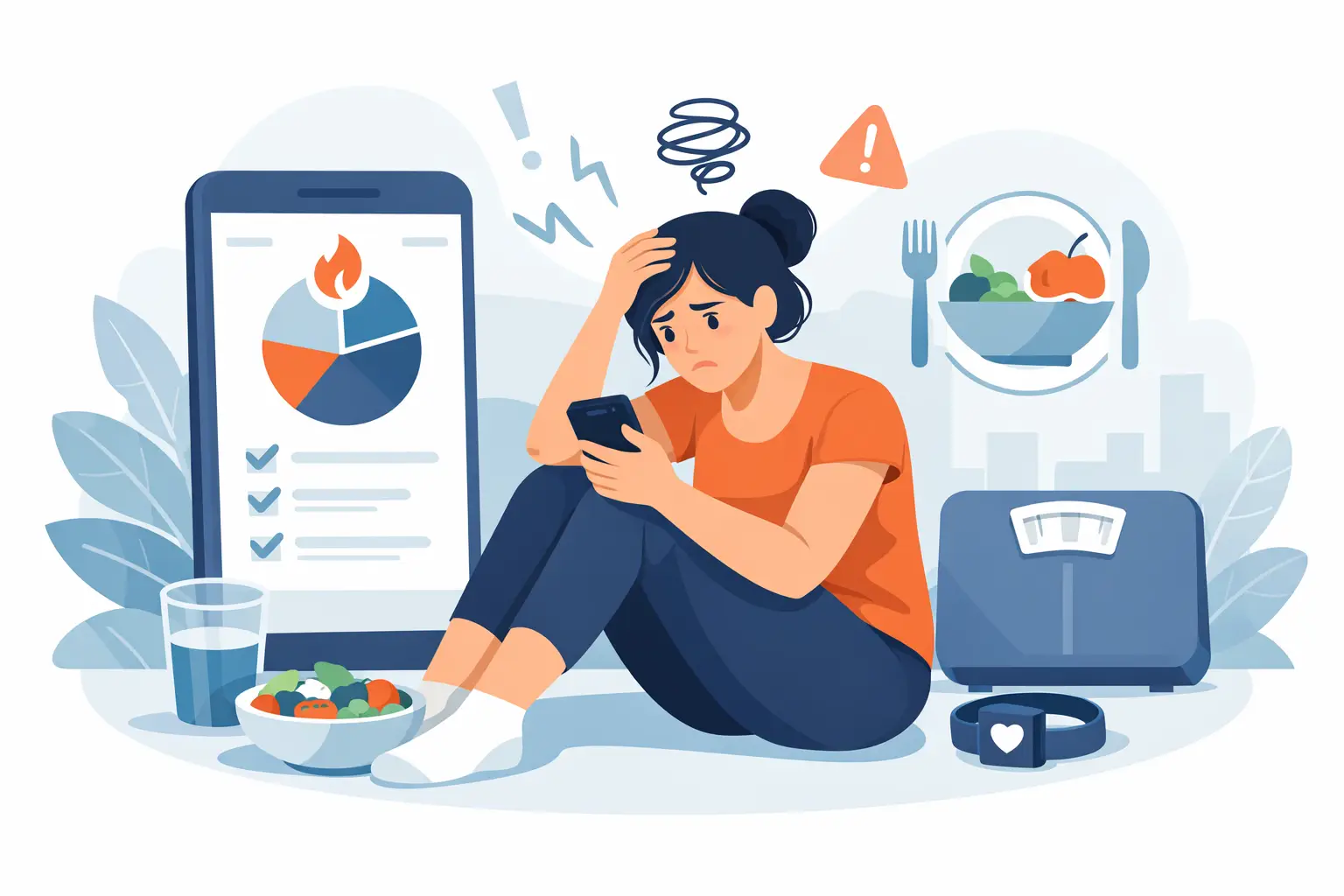
A calorie target can begin as a useful bit of structure. Then, somewhere between checking a restaurant menu in advance and feeling uneasy about an unlogged snack, it can start taking up more space than it deserves. Can calorie tracking cause stress? Yes. And that does not mean you are weak, undisciplined, or doing tracking wrong.
For some people, tracking creates clarity around eating patterns, portions, protein, or the gap between how they want to eat and what a busy week actually looks like. For others, the same tool can turn food into a running calculation. The difference is not always the app or the target. It is often the role tracking has started to play in your day.
Why calorie tracking can feel stressful
Calorie tracking asks you to pay attention repeatedly. You make an estimate, enter food, compare it to a target, and decide what the number means. That can be helpful when it stays practical. It becomes stressful when every entry feels like a test of whether you have been "good" or "bad."
There is also a basic reality: calorie counts are estimates. Restaurant meals vary. Homemade recipes are hard to measure precisely. Packaging can be imperfect. Your own energy needs change with sleep, stress, training, illness, your cycle, and daily movement. Trying to make every number exact can create pressure around something that is never fully exact.
Busy adults often feel this most sharply. A parent eating leftovers over the sink, a caregiver grabbing food between appointments, or someone working late may not have the time or energy to log every ingredient. When tracking is treated as all-or-nothing, one unlogged meal can feel like the whole day is ruined.
That is not useful information. That is a rigid rule creating a shame response.
Signs tracking may be adding more than it is helping
Stress does not always look dramatic. Sometimes it shows up as low-level mental noise that follows you through the day. You may be using calorie tracking in a way that is no longer serving you if you notice that you are:
- thinking about food numbers far more than hunger, satisfaction, or what sounds nourishing
- avoiding meals with friends because you cannot estimate them comfortably
- feeling anxious, guilty, or compelled to compensate after going above a target
- skipping meals, workouts, or social plans to preserve a number
- repeatedly starting over after a higher-calorie day
- feeling that an unlogged meal makes the day worthless
One of these signs does not automatically mean you need to quit tracking. Context matters. A short period of closer attention can feel unfamiliar without being harmful. But if the practice regularly makes you more tense, isolated, or preoccupied, it is worth changing the approach.
Can calorie tracking cause stress even when it works?
Yes. A method can produce results and still cost too much mentally.
Maybe tracking helped you learn which breakfast keeps you full until lunch. Maybe it made protein easier to prioritize or showed you why your usual afternoon snack was not satisfying. Those are real benefits. But if the process leaves you afraid of flexibility, it may not be sustainable enough for the life you actually have.
The goal is not to prove that you can follow a plan under perfect conditions. The goal is to build eating habits that can survive travel, work deadlines, family dinners, sick days, celebrations, and the ordinary messiness of being human.
A useful system should reduce decision fatigue over time. It should not make every decision feel higher stakes.
Make tracking lighter, not stricter
If tracking has started to feel heavy, you do not have to choose between logging every gram and abandoning all structure. Try lowering the precision while keeping the information that helps.
For many people, that means tracking a few anchor meals instead of every bite. Breakfast and lunch may be predictable enough to log easily, while dinner is approached with a simple plate structure. You might focus on protein, fiber-rich foods, regular meals, or a calorie range rather than treating one exact number as a pass-fail line.
A range creates room for normal variation. It also makes it easier to respond calmly when life changes. A long workout, a poor night of sleep, or a day spent on your feet can affect appetite. So can a stressful week. Those signals are not failures to override.
Another option is to use tracking as a short learning phase. Track for a week or two to notice patterns, then take a break and practice applying what you learned. You may find that you already know several meals that support your goals without needing to document them every time.
Separate data from judgment
The most helpful tracking mindset is observational: "This is what I ate, and this is how I felt." The least helpful version is moral: "This number says something about me."
A higher-calorie day is not evidence that you lack control. It may reflect a restaurant meal, an intense training day, less sleep, a celebration, or simply a day when you were hungrier. Look for patterns across weeks, not verdicts from one afternoon.
That same principle applies to progress. Body weight can shift from water, digestion, sodium, hormones, and muscle soreness. Calories are one data point. They are not a complete account of your health, effort, or future results.
Plan for meals you will not track
Trying to log every meal forever is not necessary for everyone. Give yourself a plan for the meals that are naturally harder to measure.
At a restaurant, choose a meal that includes a protein source, something colorful or high in fiber, and enough food to leave you satisfied. At a family gathering, eat the meal and return to your usual rhythm afterward. You do not need a compensation workout, a fast you did not intend to do, or a smaller meal the next day as punishment.
This is where consistency becomes more useful than control. Returning to a normal breakfast after an untracked dinner is a skill. So is eating enough before a demanding day rather than trying to save calories until you are overly hungry.
When a pause is the healthier choice
For some people, adjusting the method is enough. For others, calorie tracking is not the right tool right now.
Consider taking a break if logging consistently increases anxiety, triggers urges to restrict or binge, makes social eating feel unsafe, or becomes something you feel unable to stop doing. If you have a history of an eating disorder, disordered eating, or significant body-image distress, calorie targets may be especially complicated. Support from a registered dietitian or qualified mental health professional can help you find an approach that protects both your physical and emotional health.
A pause is not quitting on your goals. You can still build structure without calorie counts. Regular meals, a protein-forward breakfast, planned snacks, strength training, sleep routines, and noticing hunger and fullness can all support health and body-composition goals.
Use the tool, then put it down
Food tracking works best when it stays in its proper place: a tool for awareness, not a judge, a scoreboard, or a source of daily worth.
Corely is built around that distinction. Nutrition data, workouts, fasting schedules, and weekly trends can help you see what is happening. They should also help you decide what to do next without turning an imperfect day into a personal failure.
If calorie tracking currently adds stress, start smaller. Log one meal. Use a range. Take a week off. Notice what helps you feel more steady, not more controlled. The best approach is the one that leaves enough room to keep living your life while you care for your health.