
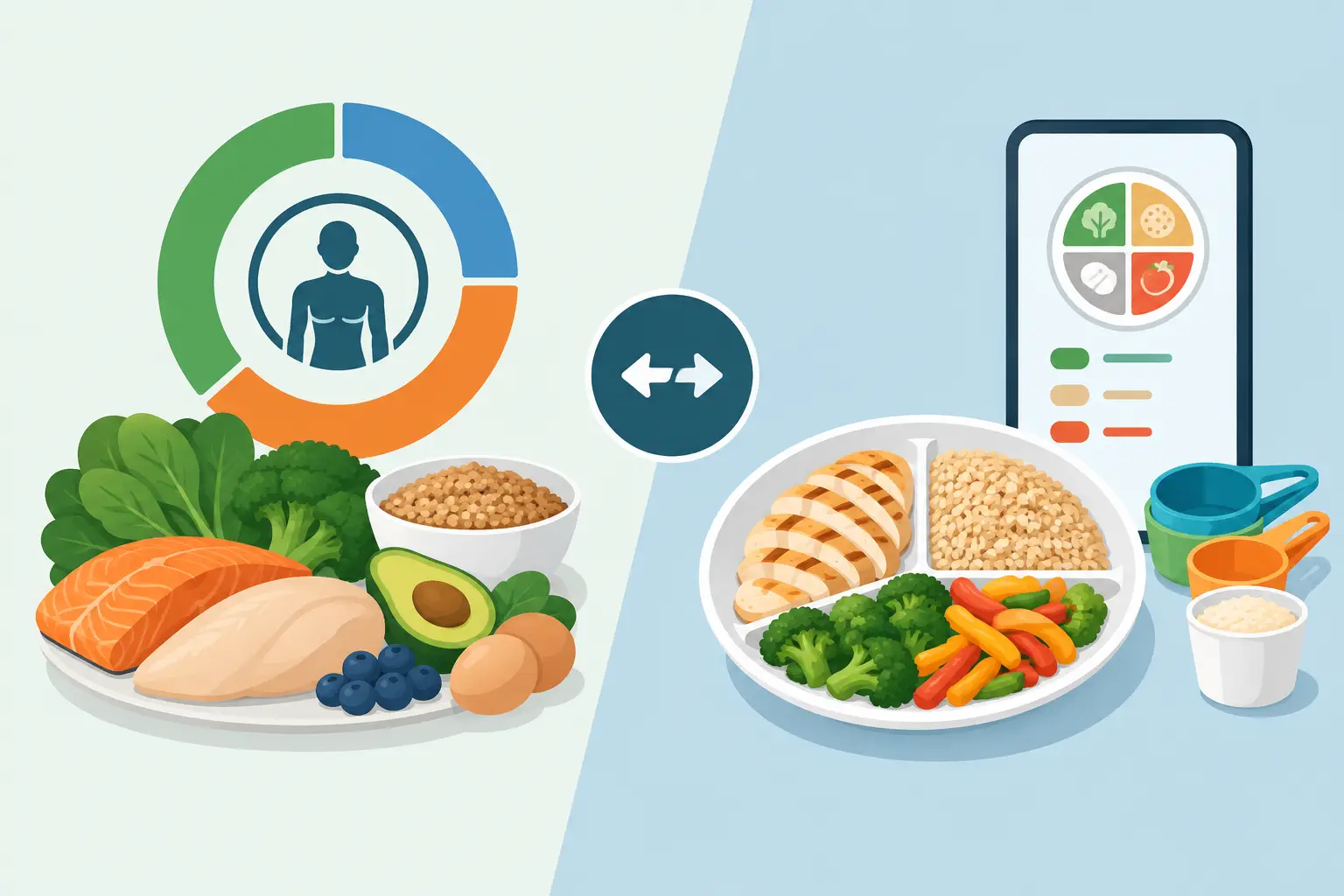
A lunch eaten between meetings can feel very different from a carefully planned dinner at home. That is where macro targets versus portion tracking becomes more than a nutrition debate. The better method is usually the one that helps you make a decent next choice when life is busy, meals are imperfect, and your attention is already stretched.
Both approaches can build food awareness, support body composition goals, and reduce the guesswork around eating. Neither requires flawless execution. The real question is how much detail helps you feel supported versus how much makes food feel like another task you are failing to complete.
What macro targets ask you to track
Macro targets set daily goals for protein, carbohydrates, and fat. Because those nutrients contain calories, tracking them also gives you a clear picture of overall energy intake. You log the foods you eat, often by weighing portions, searching a food database, or scanning a barcode, then compare your intake with your daily targets.
This approach is useful when you want precision. If strength training is a priority, a protein target can help you consistently eat enough to support recovery. If you are working toward a specific body composition change, seeing patterns in calorie and macro intake can be informative. It can also teach you which meals keep you full, energized, and satisfied.
Macro tracking is not just for people eating chicken and rice from identical containers. It can work with family meals, restaurant food, and favorite snacks. But it does ask for regular attention. You may need to estimate a homemade casserole, log ingredients before cooking, or accept that a meal out is an approximation.
That effort is worthwhile for some people. For others, it creates too much mental noise. If you find yourself skipping meals because you cannot log them accurately, or feeling anxious after going over a number, the system is no longer serving its purpose.
When macro targets tend to help
Macro targets often fit people who enjoy data, have a clearly defined nutrition goal, or want to understand why their energy and hunger shift from week to week. They can be especially helpful during a structured training phase, when consistent protein and adequate carbohydrate intake make recovery easier to manage.
They also provide useful feedback without requiring judgment. A few lower-protein days do not mean you lack discipline. They simply show you a pattern you can respond to. Maybe breakfast needs more protein. Maybe afternoon hunger is leading to less satisfying choices. The information is there to guide an adjustment, not build a case against you.
What portion tracking asks you to notice
Portion tracking uses visual or hand-based references rather than grams and nutrition labels. A palm-sized serving of protein, a cupped hand of carbohydrates, a thumb-sized portion of fats, and a fist of vegetables are common starting points. The exact framework matters less than learning to recognize what a balanced meal looks like on your own plate.
This method is usually faster and more flexible. You do not need a food scale at a friend's house. You can serve yourself dinner, notice whether the meal includes protein and produce, and move on with your evening. For people returning to regular eating after burnout, travel, caregiving, or a long break from structure, that lower barrier can be meaningful.
Portion tracking also works well when the goal is consistency rather than precision. You might decide to include a protein source at two or three meals a day, add a vegetable or fruit most days, and keep snacks satisfying enough that you are not ravenous by late afternoon. Those actions are simple, but they can change how eating feels over time.
The trade-off is that portion tracking gives you less detailed information. It may be harder to tell whether you are consistently under-eating protein or whether a body composition plateau relates to energy intake, training, sleep, or something else. Visual portions are estimates, and restaurant portions can vary a lot.
When portion tracking tends to help
Portion tracking often fits people who have felt worn down by constant logging or who need nutrition to take up less space in their day. It can be a practical choice when your schedule changes often, you share meals with family, or you are rebuilding trust in your ability to feed yourself without turning every plate into math.
It is not a lesser version of nutrition tracking. It is a different level of structure. When used thoughtfully, it can help you eat regular meals, recognize fullness, and create repeatable routines that hold up outside your kitchen.
Macro targets versus portion tracking: the real trade-offs
The most useful comparison is not precise versus lazy, or serious versus casual. It is precision versus simplicity.
Macro targets give you clearer numbers. In return, they ask for more time, planning, and tolerance for imperfect data. Portion tracking gives you more freedom and speed. In return, it leaves more room for estimation and may not answer every question about your intake.
Your current season matters too. Someone training for a lifting goal may benefit from a protein target and a period of more detailed logging. That same person may switch to portions during a demanding work month, then return to macro tracking later. There is no rule saying you have to choose one identity and stay there forever.
A helpful system should also account for your history. If numbers have previously pushed you toward restriction, compulsive checking, or guilt around food, portion tracking may be the more supportive place to start. If visual estimates leave you feeling confused and you want clarity, macro targets may offer useful structure. If you have a history of an eating disorder or active concerns about disordered eating, personalized guidance from a qualified healthcare professional is a better next step than stricter self-tracking.
A middle path often works best
You do not have to track every macro forever to benefit from macro awareness. Many people do well with a hybrid approach: use a daily protein target, track a few familiar meals, and rely on portions for the rest. Others log food for two weeks to learn their usual intake, then shift to a simpler plate-based routine.
You can also match the method to the meal. Breakfast and lunch might be easy to log because they are familiar. Dinner may be a family meal where you use portions and move on. A weekend restaurant meal may be estimated, not avoided. Consistency grows when the plan has room for normal life.
Corely can support either approach by keeping nutrition, training, fasting, and progress patterns in one place. The point is not to produce a perfect record. It is to see enough of your routine to make the next day easier.
Start with the smallest useful commitment
If you choose macro targets, begin with one anchor rather than trying to hit every number perfectly. Protein is often the most practical starting point. Notice how often you reach a reasonable protein amount, then build from there. Use saved meals and barcode scanning when they reduce effort, not because every bite needs to be documented.
If you choose portion tracking, make your anchors visible. At most meals, aim for a protein source, a produce option, and a carbohydrate or fat source that helps the meal feel complete. You do not need to force vegetables into every situation or turn a dessert into a problem. You are practicing a pattern, not passing a test.
Review your week with curiosity. Did afternoons feel more stable when lunch included enough food? Did your training sessions feel better after more consistent meals? Did fasting feel manageable, or did it lead to overeating later? Trends are more useful than one unusually busy Tuesday.
Let your method earn its place
The best nutrition system should make your life more workable. It should help you recover after takeout, a missed grocery trip, or a stressful week without convincing you that you are back at zero. If a tracking method creates more friction than insight, simplify it. If you need more clarity, add structure carefully.
Choose the approach you can return to tomorrow. A reasonably balanced meal, noticed honestly, is more valuable than a perfect plan you no longer want to follow.