
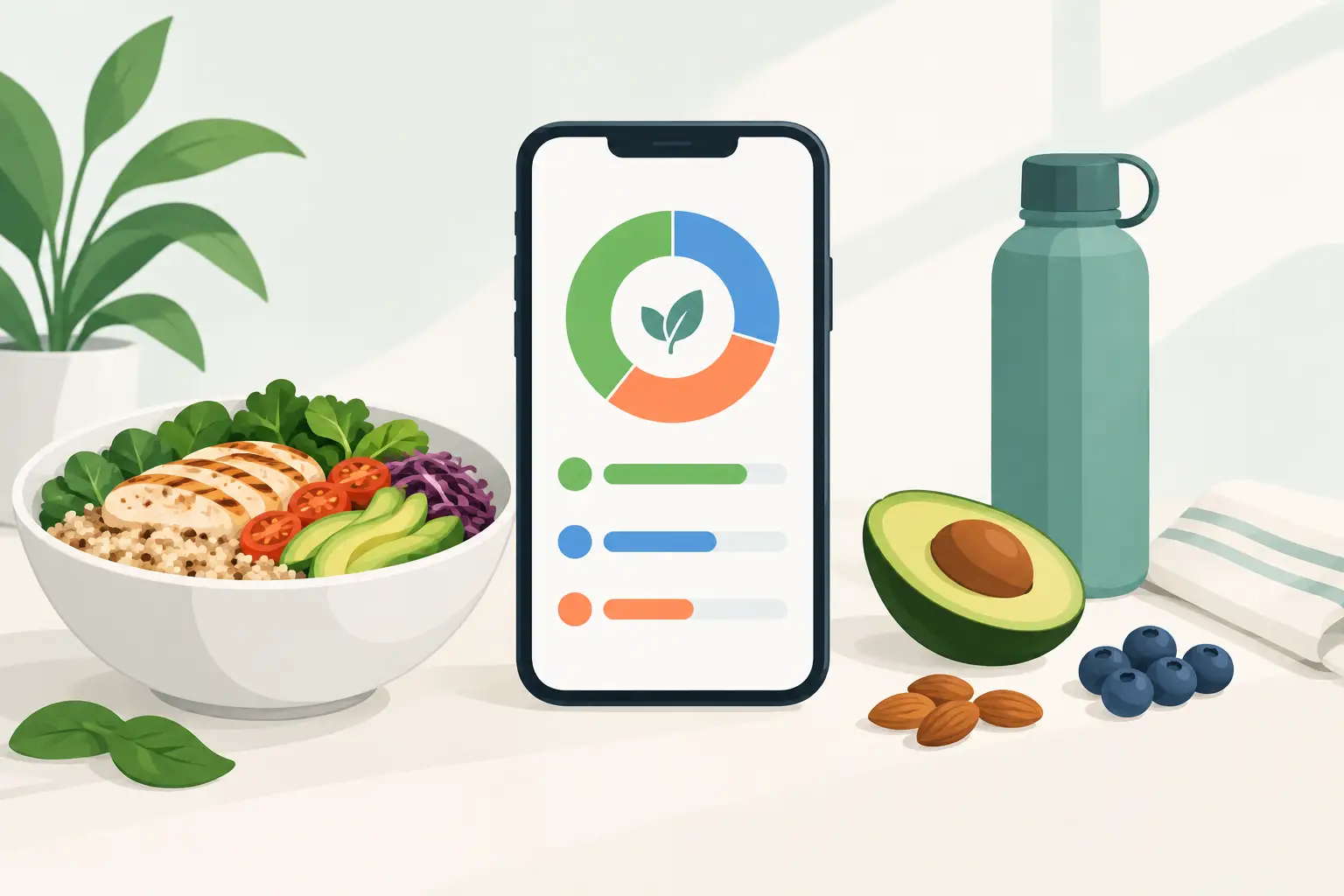
A macro tracker can be useful when food feels confusing, inconsistent, or too easy to put off thinking about. It can also become one more scorecard if every meal has to be perfect. The difference is not usually the numbers themselves. It is the role you ask them to play.
Used well, macro tracking gives you a clearer picture of your usual patterns. You may notice that breakfast leaves you hungry by 10 a.m., protein drops off on busy days, or restaurant meals are not the problem you thought they were. That awareness can support better decisions without requiring a flawless record.
What a macro tracker actually tracks
Macros, short for macronutrients, are the nutrients your body needs in larger amounts: protein, carbohydrates, and fat. Each has a job. Protein supports muscle repair and helps many people stay satisfied between meals. Carbohydrates provide readily available energy, particularly for training and active days. Fats support hormones, nutrient absorption, and meals that feel satisfying.
A macro tracker lets you log food and compare what you eat with daily targets for calories, protein, carbs, and fat. Some people use those targets to support strength training or a body-composition goal. Others use them to create steadier meals after a long stretch of skipped lunches and takeout dinners.
Neither reason requires turning food into a moral test. A target is a reference point, not a verdict on whether you had a good day.
Start with a target you can live with
The most precise target is not always the most helpful one. If your plan asks for a level of meal prep, weighing, and attention that your current life cannot support, it will likely create pressure instead of consistency.
For many people, protein is the most useful place to begin. It is often harder to get enough when work runs late, kids need something, or you are rebuilding a training routine. A reasonable protein target can give meals a little structure without making every ingredient feel high stakes.
Calories, carbs, and fat can be helpful too, especially when you have a clear goal and enjoy more detail. But they are estimates. Food labels vary, restaurant portions are uncertain, and your needs can shift with sleep, stress, activity, menstrual cycles, illness, and recovery. Treat the numbers as useful ranges rather than tiny boundaries you must not cross.
If you are returning after a break, consider a simple first phase: log what you normally eat for several days. Do not rush to fix it. A baseline is more honest when you are not trying to impress the app.
Choose the level of detail that fits your season
There is no prize for tracking every herb, splash of milk, or bite from your child’s plate. At the same time, leaving out the foods that happen most often can make the picture less useful. The goal is not perfection. It is enough information to see patterns and make practical adjustments.
A busy week may call for barcode scanning packaged staples, saving a few repeat meals, and making a reasonable estimate for dinner out. A quieter season may leave room for more detailed logging. Both approaches count. The right level of detail is the one you can return to without resentment.
How to use a macro tracker without making food stressful
Start by logging close to when you eat. Waiting until bedtime turns a normal task into detective work, especially after a full day. A quick entry after breakfast or lunch is usually enough to keep the habit light.
Then use the information to guide the next choice, not to rewrite the last one. If lunch was lower in protein than you planned, dinner might include chicken, tofu, beans, Greek yogurt, fish, or another food you genuinely like. If a meal was higher in fat or carbs, you do not need to compensate by skipping the next meal. You can simply let the rest of the day be ordinary.
This matters because overcorrection often creates the pattern people are trying to escape: restrict, get overly hungry, eat past comfort, feel guilty, and promise to start again Monday. A macro tracker should interrupt that cycle by making the next step easier to see.
It also helps to build meals around familiar anchors. You might have two or three breakfasts you enjoy, a dependable lunch option, and a few protein-forward snacks available for crowded days. Repetition is not boring when it reduces decision fatigue. It can be a form of care.
The numbers are useful, but the pattern matters more
A single day tells you very little. Maybe you trained hard, attended a birthday dinner, had a migraine, traveled for work, or simply needed more food than usual. None of that means your plan stopped working.
Look for weekly patterns instead. Are you consistently under-eating before workouts? Do afternoons feel better when lunch has more protein and fiber? Are late-night snacks connected to hunger, stress, or not having eaten enough earlier? These are questions a tracker can help you ask without assuming there is something wrong with you.
Progress is also broader than a calorie average. Better training sessions, more stable energy, fewer chaotic food decisions, and the ability to resume a routine after disruption all matter. For someone rebuilding health habits, those changes are often more meaningful than a perfectly filled dashboard.
When tracking is not helping
Macro tracking is optional. If logging makes you anxious, encourages restriction, or makes social meals feel unsafe, pause and reassess. Some people benefit from using only a protein target. Others do better tracking meals loosely for a short period, then relying on meal structure and hunger cues. If you have a history of disordered eating or food tracking brings up distress, support from a qualified clinician or registered dietitian can be a safer next step.
The tool should serve your life. Your life should not shrink to serve the tool.
A macro tracker works best with the rest of your routine
Food does not exist separately from sleep, movement, stress, and recovery. A day with poor sleep may change your appetite. A new lifting program may make you hungrier. A fasting schedule may work well until an early meeting or family dinner changes the day.
That is why a connected view can be more helpful than separate apps asking for separate kinds of perfection. In Corely, nutrition targets can sit alongside workouts, fasting, and weekly trends, so you can see the context around your choices. The point is not to monitor every part of yourself. It is to notice what helps you feel more steady.
For example, if you regularly miss your eating window after evening workouts, the answer may be to adjust the window, prepare a post-workout meal, or reconsider whether that schedule fits right now. You do not need to force a system that keeps colliding with your real life.
What to do after an imperfect day
A missed log is not a ruined week. Neither is pizza, dessert, a work lunch, or a day when you ate whatever was easiest. You do not need a cleanse, a punishment workout, or a smaller breakfast tomorrow.
Open the tracker at the next meal. Log what you can. Make one supportive choice, such as adding protein to lunch, packing a snack, or planning dinner before you are exhausted. Small actions rebuild trust faster than dramatic corrections.
The value of a macro tracker is not that it makes you more controlled. It is that it can make you more informed, more flexible, and less likely to disappear from your own routine when life gets messy. Keep the information that helps, let go of the pressure that does not, and give yourself a simple place to begin again.