
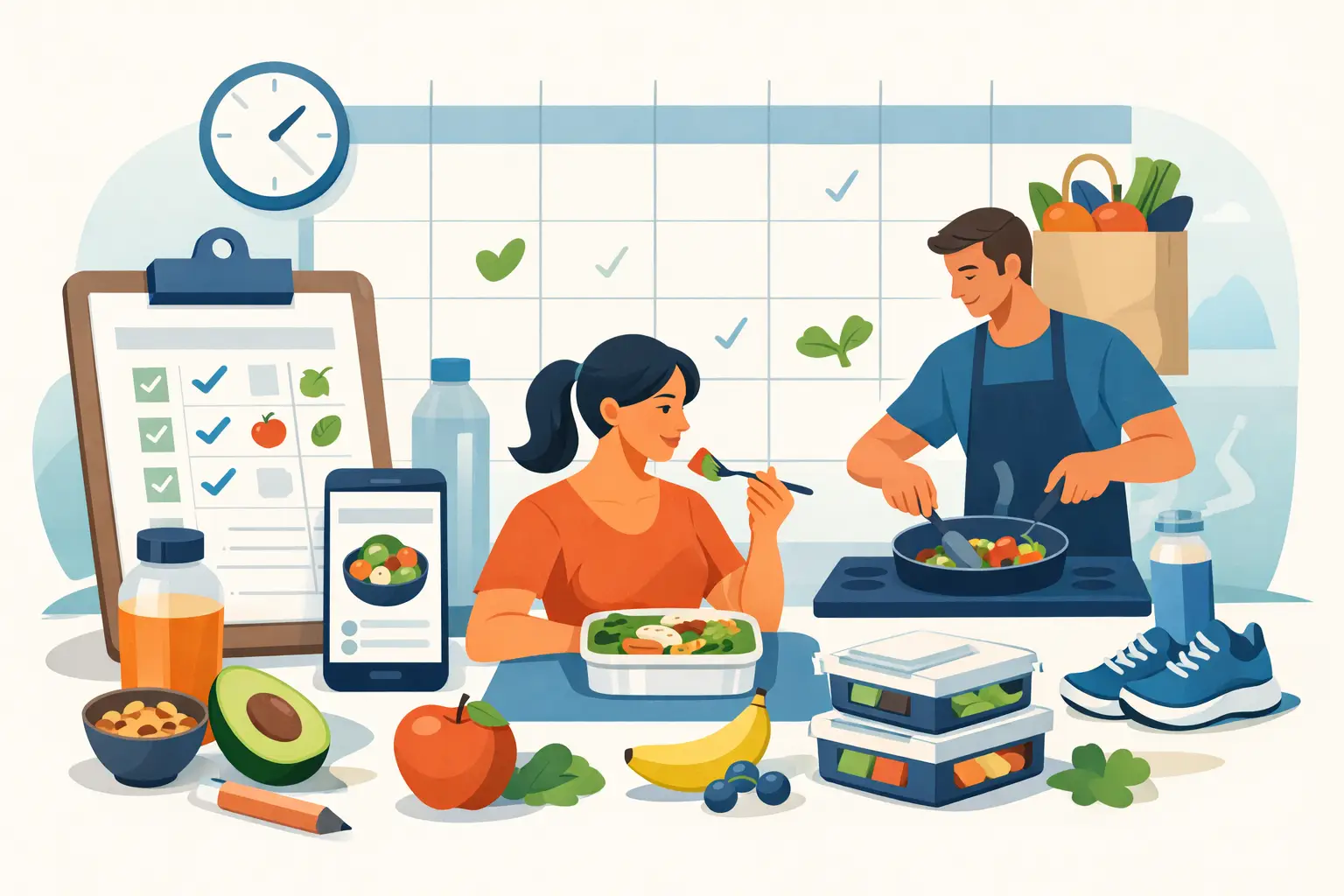
The 4:30 p.m. question is rarely, "What is the perfect meal?" It is usually, "What can I eat before the next meeting, school pickup, or exhausting evening?" Good nutrition planning makes that moment easier. It gives you a few workable answers before hunger, stress, and low energy are making the decisions for you.
That does not mean eating the same thing forever or tracking every bite with anxiety. It means creating enough structure that food supports your goals on ordinary days, including the messy ones. The goal is not a flawless plan. It is a plan you can return to.
Nutrition Planning Starts With Your Actual Life
A plan built for an imaginary version of your schedule will fall apart quickly. If mornings are rushed, a detailed cooked breakfast may not be realistic. If you regularly eat with family, separate "diet meals" may create more friction than they solve. If your workdays change without warning, you need portable options and a little room to adjust.
Start by noticing patterns, not judging them. When do you tend to get very hungry? Which meals are easy to handle? Where do takeout, skipped meals, or random snacking show up most often? These are not failures to correct. They are useful details for building a plan that fits.
For many people, the best place to begin is with two dependable meals and one dependable snack. They do not need to be exciting. They need to be available, satisfying, and easy to repeat. A yogurt bowl with fruit and nuts, eggs with toast, or overnight oats can cover breakfast. Lunch might be leftovers, a salad kit with chicken, or a grain bowl assembled from simple staples. The details depend on your preferences, budget, culture, and schedule.
Repetition is not a lack of effort. It is a way to reduce the number of decisions your day demands.
Set Targets That Help, Not Targets That Punish
Calories and macros can be useful tools, especially if you want clearer awareness of portions, protein intake, or energy balance. They can also become too rigid when every number feels like a test you can fail. The right level of tracking depends on what helps you make calmer choices.
If you are new to tracking, begin with observation. Log a few typical days without trying to make them perfect. You may notice that lunch is lower in protein than you expected, that drinks add up, or that you tend to go many hours without eating and then feel out of control at night. This information is more valuable than an aggressive target copied from someone else.
A useful nutrition target should be specific enough to guide action and flexible enough to survive real life. Protein is often a practical first focus because it can support fullness, recovery, and strength goals. Instead of trying to fix everything at once, aim to include a meaningful protein source at each meal. That could be chicken, fish, tofu, beans, Greek yogurt, cottage cheese, eggs, lean meat, or a protein shake when convenience matters.
Carbohydrates and fats belong in the picture too. Carbs can support training, energy, and foods you genuinely enjoy. Fats help with satisfaction and are part of a balanced diet. There is no universal macro split that works best for every person. Your training volume, medical needs, food preferences, appetite, and daily routine all matter.
If you have a medical condition, are pregnant, have a history of disordered eating, or are managing medications that affect appetite or blood sugar, get personalized guidance from a qualified clinician or registered dietitian. More tracking is not always better.
Build Meals Around a Simple Anchor
You do not need to measure every meal forever to eat with more intention. A simple meal structure can carry a lot of the work: start with protein, add produce or fiber-rich food, include a carbohydrate source based on your needs and activity, then add fats and flavor that make the meal worth eating.
For example, a dinner of salmon, rice, roasted vegetables, and sauce has all the pieces. So does a turkey sandwich with fruit and a side salad. So does a bowl of beans, rice, salsa, avocado, and shredded cheese. The format can change without losing the basic structure.
This approach is especially helpful when eating out. You do not have to hunt for the "cleanest" menu item or turn dinner with friends into a math problem. Look for a protein source, choose something that will satisfy you, and add a fruit or vegetable when it is easy. Then move on with your evening.
Nutrition planning should support your life, not make you perform wellness in public.
Keep Convenience Foods in the Plan
A stocked kitchen does not have to mean hours of meal prep on Sunday. Some people enjoy cooking batches of meals. Others do better with a mix of fresh food, frozen options, canned staples, and ready-to-eat protein. Both can work.
Keeping a few reliable convenience foods on hand can prevent the familiar cycle of waiting too long, becoming overly hungry, and ordering whatever arrives fastest. Think bagged salad, frozen vegetables, microwave rice, rotisserie chicken, tuna packets, canned beans, pre-cooked eggs, soup, protein yogurt, fruit, and whole-grain wraps.
Convenience is not cheating. It is planning for the energy you actually have.
Plan for Disrupted Days Before They Happen
The strongest nutrition plan is not the one that never gets interrupted. It is the one with a reasonable response when it does.
A late meeting may replace dinner with drive-thru food. A sick child may make cooking impossible. Travel may change your usual meal times. None of this means the week is ruined. It means you need a next-step plan instead of a punishment plan.
Try creating a few personal fallback options. Maybe it is a grocery store meal you know you like, a restaurant order that includes protein and vegetables, or a freezer meal you can make in ten minutes. Maybe it is simply committing to eat a balanced breakfast the next morning rather than trying to "make up for" a big dinner by skipping food all day.
Restricting hard after an off-plan meal often keeps the cycle going. Hunger builds, energy drops, and food feels more urgent. A steadier response is usually more effective: drink water, eat your next normal meal, and return to your usual rhythm.
The same applies if you use intermittent fasting. Fasting can be a helpful structure for some people, but it should not become a way to compensate for eating. If a fasting window no longer fits your day, adjust it. A schedule is there to serve you.
Use Data as Feedback, Not a Verdict
Tracking meals, weight, energy, workouts, and fasting can reveal useful patterns over time. But a single day rarely tells the whole story. A higher scale reading may reflect sodium, digestion, hormones, or a later meal. A day above your calorie target may be part of a social weekend, hard training block, or simple human appetite.
Look for weekly trends instead. Are you getting enough protein most days? Do you feel steadier during afternoon meetings? Are you recovering better from workouts? Is late-night eating happening because dinner is too small, or because you are genuinely hungry after a long day?
Corely brings nutrition, workouts, fasting, and progress into one place because these habits affect each other. Food choices are easier to understand when you can see the context around them, not just a number in isolation.
Make the Next Choice Small Enough to Do
When your eating has felt inconsistent, it can be tempting to start over with a strict grocery list, a perfect meal-prep routine, and rules for every social event. That kind of reset can feel productive for a few days. Then life asks something difficult of you, and the plan has nowhere to bend.
Choose one action that lowers friction this week. Buy two easy protein options. Pack an afternoon snack. Make enough dinner for tomorrow's lunch. Log meals for three days just to learn. Add one vegetable you already like to dinner.
Small actions can seem almost too ordinary to matter. But ordinary actions repeated through stressful weeks are where trust in yourself gets rebuilt.
You do not need to earn your way back into healthy habits. Start with the next meal, make it supportive enough, and let that be a real win.