
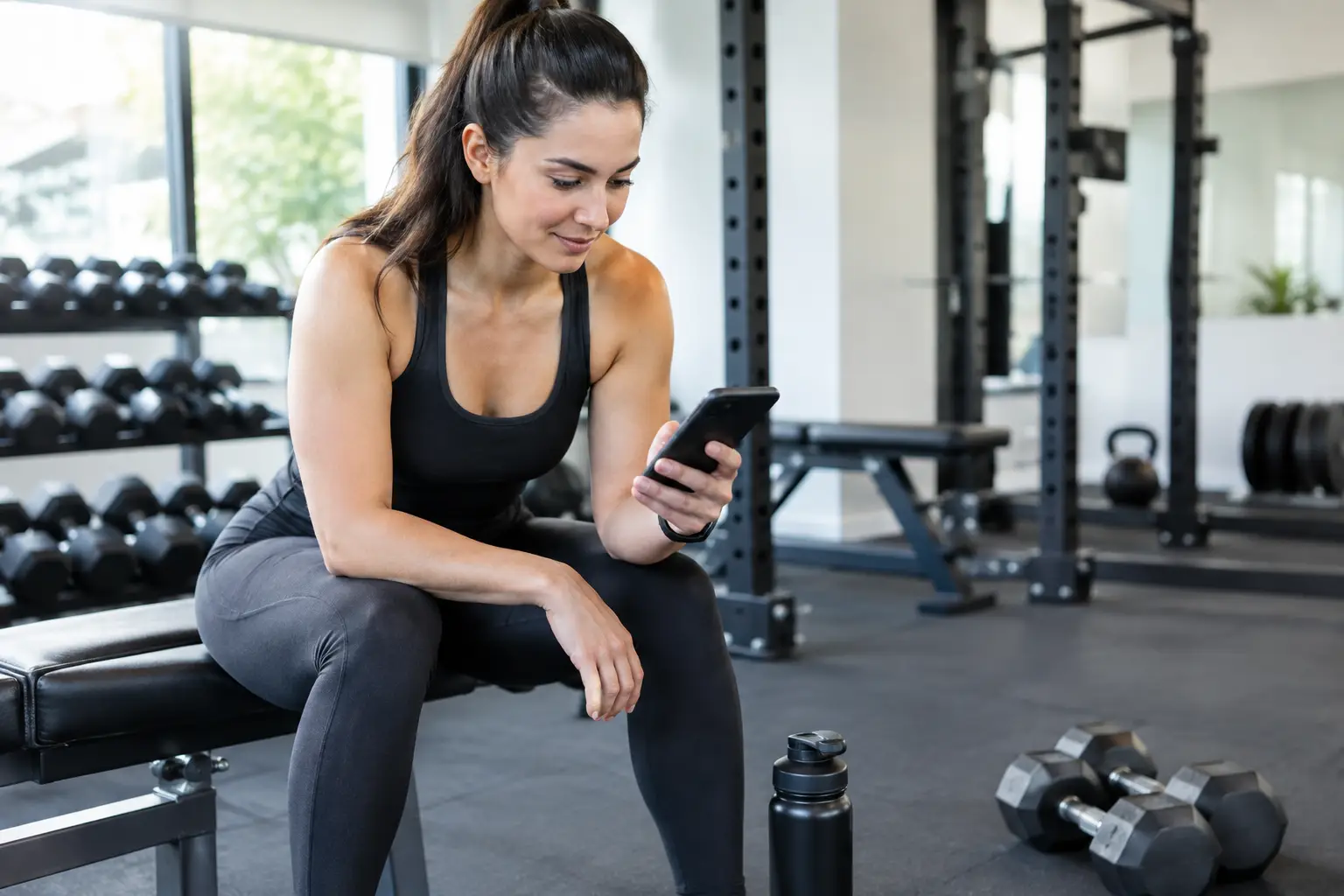
A gym session can look very different from one week to the next. One day you have barbells, cables, and a bench. The next, you are at a hotel gym with a few dumbbells and one treadmill. Learning how to track workouts with different gym equipment helps you keep the training signal clear, even when the setting is not.
The goal is not to make every workout identical. It is to record enough that you can recognize what you did, see whether it is getting easier or stronger over time, and make a sensible choice next session. A simple log does that better than a perfect one you stop using.
Track the movement, then the equipment
Start by naming the movement pattern before getting attached to a specific machine or tool. A squat, press, row, hinge, carry, or steady cardio session can all have several equipment options. The tool changes the feel and the setup. The basic job of the exercise often stays similar.
For example, a barbell back squat, dumbbell goblet squat, hack squat machine, and leg press are not interchangeable in every detail. Their range of motion, stability demands, and loading can differ a lot. But they may all serve the same broad purpose in a lower-body session. Recording that relationship gives you useful context when equipment changes.
Use the exercise name in your log, then add the version you used. Instead of writing only “row,” write “seated cable row” or “one-arm dumbbell row.” Instead of “press,” write “chest press machine” or “incline dumbbell press.” This takes a few extra seconds and saves you from guessing later.
What to record for strength equipment
For most strength exercises, record the load, sets, reps, and how the set felt. That is enough for many people.
Load is straightforward with a barbell, dumbbell, kettlebell, or plate-loaded machine. Write down the weight you actually moved, including the dumbbell weight for each hand when that is relevant. For a barbell, be consistent about whether your number includes the bar. Most people find it easiest to record the full loaded weight.
Machines need a little more care. A stack labeled 100 pounds at one gym may not feel anything like a stack labeled 100 pounds somewhere else. Cable ratios, pulley systems, maintenance, and machine design all change the experience. Treat machine numbers as useful references within that same machine, not as a universal strength score.
Add a short note when it matters: “different gym,” “new cable machine,” “seat setting 4,” or “handles felt wider.” These notes are not busywork. They explain why a number may look different from last week.
Reps and sets give the load meaning. Ten repetitions at a weight that leaves you with plenty in reserve is different from ten slow, difficult repetitions near the end of a session. You do not need to turn every set into a test. A quick effort note works well: easy, steady, challenging, or near your limit.
That note is especially helpful when you return after a busy stretch. If you used less weight but the work felt steady and controlled, that is useful information. It is not a failed version of the old workout.
Free weights: record the setup that changes the lift
Free weights are flexible, but small setup changes can affect the result. For dumbbell work, note the bench angle if you use incline positions. For a barbell lift, record a meaningful variation such as paused, tempo, or close-grip if it changes how you train.
You do not need a detailed journal entry after every set. Save notes for things you would genuinely want to remember. “Used 40-pound dumbbells, bench notch 3, last set challenging” is plenty.
Machines and cables: make the machine recognizable
For selectorized machines, record the machine name, the stack number or listed weight, and key settings such as seat height. For cables, include the attachment and height if those change your movement. “Cable pulldown, wide bar, seat 5” is more useful than “pulldown.”
If you use a plate-loaded machine, note the plates per side if that is how the machine is loaded. It reduces confusion when you revisit the workout later.
How to track cardio when machines differ
Cardio equipment creates a different tracking problem. A mile on one treadmill is easy to compare with a mile on another. Calories, resistance levels, and effort scores usually are not.
For a treadmill, track duration, distance, pace, and incline when relevant. For a bike, track duration and either distance, resistance, watts, or cadence if the machine shows them. For a rower, duration, distance, and average pace are useful. Choose the measurements your equipment reliably provides rather than chasing every number on the screen.
When you switch machines, let time and perceived effort carry more weight than the machine's calorie estimate. A 25-minute steady bike ride and a 25-minute incline walk do not need to match exactly to both count as cardio. Write down what you used and how it felt.
A simple note such as “20 minutes, moderate effort, hotel bike” makes the session easy to understand later. It also keeps one unfamiliar console from turning into a reason to skip logging.
Don't compare numbers that are not comparable
This is where workout tracking can become discouraging if the log is too rigid. A 50-pound dumbbell press is not automatically equivalent to a 100-pound chest press machine. A cable row from one gym is not directly comparable to a cable row from another. Different equipment can support the same training pattern without producing matching numbers.
Compare like with like whenever possible. Look for progress across repeat sessions using the same setup. If you have the same dumbbells, machine, or cardio equipment, you can see whether you added a rep, increased load, improved control, or felt more comfortable at the same effort.
When the equipment changes, compare the broader pattern instead. Did you complete a similar amount of work? Did you keep a movement in your routine? Did the session feel appropriately challenging for that day? Those are real forms of consistency.
Build substitutions into your plan
A workout plan works better when it has room for the gym you actually walk into. For each main exercise, keep one or two substitutions in mind. A cable row can become a dumbbell row. A barbell press can become a machine press. A planned treadmill walk can become a bike session if every treadmill is taken.
The substitution should have a similar purpose, not a matching number. Then track it as its own exercise version. Do not overwrite “barbell Romanian deadlift” with “dumbbell Romanian deadlift” just to keep your history tidy. Clean records are more useful when they reflect what happened.
If you use a workout app, create distinct exercise entries for versions you use often. In Corely, that can help you keep the session structure while logging the equipment available that day. The plan can stay familiar without pretending every gym floor is the same.
Use a minimum log on rushed days
Some days you will have time to record every set. Other days you will finish the last exercise while thinking about school pickup, dinner, or the meeting you are already late for. On those days, use a minimum log: exercise, a rough total of sets and reps, and one effort note.
For example: “Leg press, 3 sets of 10, challenging” or “Bike, 18 minutes, steady.” You can add more detail later if you want. You do not have to.
This approach protects the habit from all-or-nothing thinking. A partial record still tells you that you showed up and what you did. Over a few weeks, it can reveal patterns in your energy, equipment access, and training consistency that a blank day cannot.
Review the trend, not one unusual session
Look back at your workouts weekly or every few weeks. Ask practical questions. Which equipment do you use most often? Which substitutions keep showing up? Are certain sessions easier to complete at home, at a busy gym, or during a shorter lunch break?
You may find that a machine-based session is more realistic when your time is tight, while free weights fit better on slower days. That is not lowering the standard. It is learning what supports your routine.
The most useful workout log is not the most detailed one. It is the one that makes your next session feel possible. Record what you can, name the equipment clearly, and let a changed plan still count as a plan you kept.