
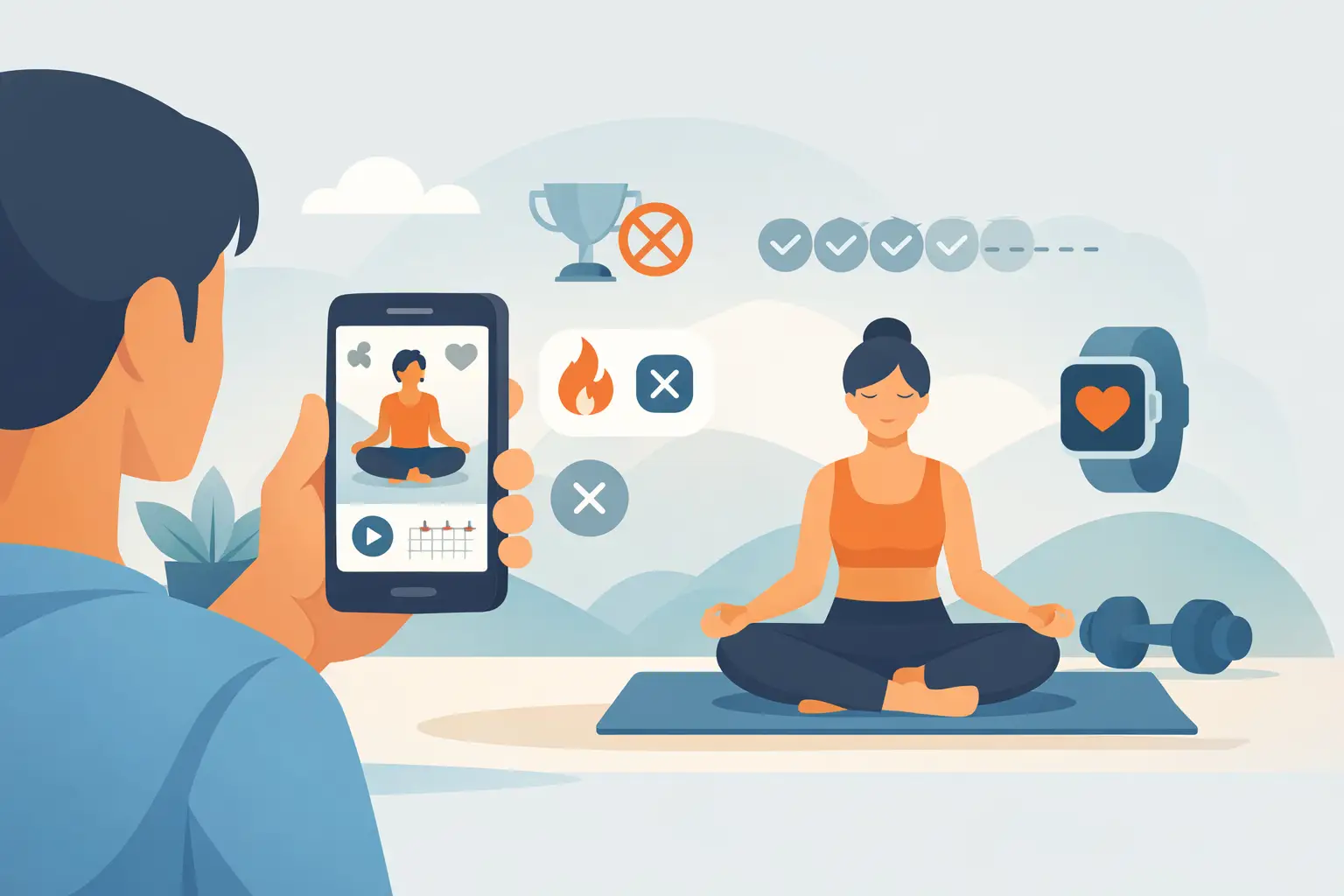
A fitness app without streak pressure does not treat a missed workout like a character flaw. It understands that a sick child, a late project, travel, grief, a bad night's sleep, or plain exhaustion can interrupt even the routines you care about. The useful question is not, "How do I protect my perfect record?" It is, "What is realistic for me today?"
That difference sounds small. For people who have started and stopped fitness plans more times than they can count, it can change everything.
Why streaks can make healthy habits harder
Streaks are designed to create momentum. Seeing a number rise can feel satisfying, especially early on when motivation is high. For some people and some habits, that little nudge is harmless.
The trouble begins when the streak becomes the goal. A three-day break can start to feel like failure, even if you spent those days caring for family, recovering from illness, or handling a difficult week at work. Instead of returning with a shorter workout or a simple meal log, many people stop opening the app altogether. The record is gone, so why bother?
That is an all-or-nothing pattern, not a lack of discipline. Fitness apps can accidentally reinforce it by celebrating uninterrupted activity while offering little help for the far more common experience of interruption.
Real consistency is not doing the same thing every day without exception. It is having a way back when life changes the plan. A person who trains three times this week after missing last week is building a more durable habit than someone who forces a workout only to preserve a badge and then burns out.
What a fitness app without streak pressure should do instead
A supportive app still provides structure. Removing shame should not mean removing useful information. Most people do better with a clear workout plan, nutrition targets, a fasting window if they use one, and a place to see what has been happening over time.
The difference is how those tools respond to imperfect days.
A good system helps you choose the next reasonable action. If you have not trained in a week, it should make it easy to restart with an appropriate session rather than pushing you to make up every missed workout. If dinner did not match your calorie or macro target, it should let you log it honestly and move on. If fasting ended early because you felt unwell or needed breakfast before a long day, it should be information, not a red mark against you.
The goal is not to lower your standards. It is to make your standards usable in a real life.
Progress should be visible without becoming a verdict
Daily scores can be motivating, but they can also turn normal variation into a constant evaluation. Body weight changes with hydration, sleep, sodium, hormones, and digestion. Training quality changes with stress and recovery. Hunger does not follow a spreadsheet perfectly.
Weekly behavior trends are often more useful than a single day. You might notice that you tend to skip lunch before late meetings, that strength sessions feel better after a rest day, or that fasting is easier when dinner is planned. Those observations give you something practical to adjust.
A dashboard should help you see patterns, not put you on trial. The point of tracking is better decisions, not proof that you were "good" enough.
Plans should bend before they break
Rigid plans often assume that every week will look alike. Many adults know that is not true. Parents have unpredictable mornings. Caregivers get urgent calls. Professionals have travel, deadlines, and social obligations. Recovery from burnout may mean some weeks have less capacity than others.
A useful training plan can still include progression, supersets, circuits, and clear exercise guidance. It simply needs room for a shorter session, a lower-intensity day, or an intentional rest day. You may follow the full workout on Saturday instead of Tuesday. You may do two movements rather than five. Both can count as showing up.
Nutrition works the same way. Calorie and macro targets can build awareness, especially when you want to support body composition or performance. Barcode scanning can make logging less tedious. But targets should guide your choices, not demand that every meal look identical. A meal from a drive-through after a hard day is not a reason to abandon food tracking for the month.
Look for coaching that answers "what now?"
Many health apps collect a lot of data and leave you alone with it. You can see missed workouts, incomplete fasts, calories, macros, steps, weight, and sleep, then still have no idea what to do next.
The most helpful coaching translates your recent behavior into a clear next step. That may be a planned strength session, a recovery-focused day, a reminder to eat a more substantial lunch, or permission to keep today simple. It should account for the fact that training, food, fasting, and recovery affect one another.
For example, if you have trained hard several days in a row and your eating has been inconsistent, the best recommendation may not be another demanding workout. It may be rest, a balanced meal, and a return to your plan tomorrow. If you have been inactive for two weeks, a coaching prompt that suggests a manageable session is usually more useful than a message about your lost momentum.
This is where an integrated app can help. When workouts, nutrition, fasting, and progress live in separate places, it is easy to miss the connections between them. A single system can make the picture clearer without asking you to manage five different dashboards.
How to choose the right app for your routine
Before downloading another fitness app, pay attention to the emotional experience it creates. Read the language around missed days. Does it frame breaks as failure, or as part of building a practice you can return to? Does it reward extreme compliance more than steady effort? Can you adjust plans without feeling like you are starting over?
Then look at the practical tools. If strength training matters to you, find an app that supports structured sessions and progression rather than only generic activity rings. If food awareness is a goal, make sure nutrition tracking is quick enough to use on busy days. If you practice intermittent fasting, look for scheduling that fits your routine rather than a rigid challenge format.
Privacy and simplicity matter, too. More metrics are not automatically better. The right amount of tracking is the amount that helps you act with more clarity. If logging every detail makes you anxious or takes too much time, choose a lighter approach. If detailed macros help you feel prepared and informed, use them as a planning tool.
Corely is built around that balance: practical structure for workouts, nutrition, fasting, and progress, with coaching that helps you return after disruption instead of punishing it.
A better definition of consistency
Consistency is often confused with never missing. But no one can guarantee that. Bodies get sick. Families need care. Work becomes demanding. Motivation fades and then returns. A health routine that only works during calm, predictable weeks is not a routine built for most people.
A better definition is this: you keep reducing the time between falling out of rhythm and taking the next helpful action. Sometimes that action is a full workout. Sometimes it is logging breakfast, taking a walk, preparing tomorrow's lunch, or going to bed earlier.
Those actions may not create an impressive streak. They create trust with yourself. And that is the kind of progress worth carrying into the next hard week.